Local Tours · 6 min read · Updated September 13, 2026
Local vs Regional vs National Junior Golf Tours: The Ladder Every Player Climbs
Junior golf in the United States is not one tour. It is a ladder of roughly six levels, and the most expensive mistake families make is starting too high. A ten-year-old who shoots 95 does not belong in a 36-hole regional event with a $300 entry fee and a field of 16-year-olds. A 16-year-old who shoots 73 is wasting summers on one-day local events that no ranking system or coach will ever see. This guide explains each rung, who belongs on it, and the signs that it is time to move up.
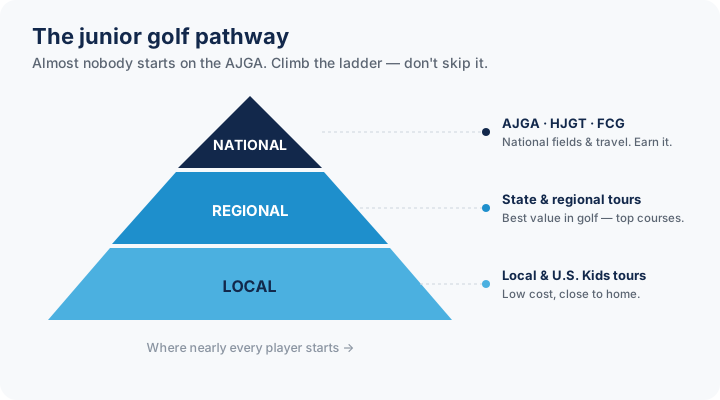
The ladder at a glance
| Level | Who runs it | Typical format | Ages | Cost per event | Results count toward |
|---|---|---|---|---|---|
| 1. National youth programs | U.S. Kids Golf, PGA Jr. League, First Tee, Drive, Chip & Putt | 9 holes, scrambles, skills | 5–13 | $25–$80 | Nothing (by design) |
| 2. Local & metro tours | Non-profits, independents, junior golf associations | One-day, 9 or 18 holes | 7–18 | $40–$120 | Sometimes Junior Golf Scoreboard |
| 3. PGA Section junior tours | Your local PGA of America Section | One-day 18 holes; two-day majors | 7–18 | $60–$200 | JGS on most; PGA Jr. Championship path |
| 4. State golf association junior tours | Your USGA Allied Golf Association | One- and two-day events; state championships | 12–18 (some 8+) | $60–$250 | JGS; USGA qualifiers; some AJGA PBE stars |
| 5. Regional multi-state tours | Independent for-profit and non-profit tours | Two-day, 36 holes | 10–18 | $150–$350 | JGS; AJGA PBE stars on many |
| 6. National tours | AJGA, HJGT, FCG, USGA championships | 36–54 holes, national fields | 12–19 | $250–$500+ plus travel | Rolex AJGA Rankings, JGS, WAGR |
Every program at levels 1 through 5 is listed, by state, in our local tours directory. The national tours are compared on the tours page.
Level 1: national youth programs (ages 5–13)
U.S. Kids Golf Local Tours are the most common first tournament in America. Roughly 100 local tours run spring, summer, and fall seasons of 9-hole events (18 for older divisions) with age-appropriate yardages, and the top finishers qualify for regional and world championships. PGA Jr. League is team golf: two-person scrambles in numbered jerseys, coached by a PGA professional, no individual scores posted anywhere. First Tee chapters teach the game and life skills at low or no cost and run their own beginner events. Drive, Chip & Putt is a free skills competition with local qualifiers at hundreds of courses every summer, and the finals at Augusta National the Sunday before the Masters.
Belongs here: any player under 12, and any beginner under 14. The goal is fun, reps, and learning how a tournament day works.
Move up when: the player can finish 18 holes from an appropriate tee without losing interest and is asking to play "real" tournaments.
Our guide to U.S. Kids, PGA Jr. League, First Tee, and Drive, Chip & Putt goes deeper on each.
Level 2: local and metro tours (ages 7–18)
City and county junior golf associations, non-profit foundations, and small independent tours run one-day events within an hour's drive. Fields are split into two- or three-year age divisions, fees are low, and the same families show up every weekend, which makes the first year of tournament golf far less intimidating.
Belongs here: first-year tournament players of any age, and any player who cannot yet break 100 from full-length tees.
Move up when: scores are consistently in the 80s and the player is finishing near the top of the local division.
Level 3: PGA Section junior tours (ages 7–18)
The PGA of America has 41 Sections, and most run a junior tour. Several of them, like the Northern Texas PGA Junior Tour, are among the largest junior tours in the world. Section tours usually have tiered divisions (a beginner series alongside a championship series), so a 12-year-old shooting 100 and a 17-year-old shooting 72 can both play the same day. Most report results to Junior Golf Scoreboard, and Section junior championships qualify players for the national PGA Jr. Championship.
Belongs here: players from their first 18-hole event through high-level competition. This is often the tour a family stays on longest.
Move up when: the player wins or contends regularly in the top division and wants multi-day events.
Level 4: state golf association junior tours (ages 12–18)
Your state's USGA Allied Golf Association runs the state junior championships (Junior Amateur, Junior Match Play, Girls' Junior), hosts the local qualifiers for the U.S. Junior Amateur and U.S. Girls' Junior, and usually operates a junior tour of one- and two-day events. Fields are stronger than local tours, courses are better, and the pace is closer to a championship. Prices are often lower than regional tours because associations are non-profits.
Belongs here: players shooting in the 70s and low 80s who want championship-quality events without national travel.
Move up when: the player is contending in state junior championships and needs ranked 36-hole results.
Level 5: regional multi-state tours (ages 10–18)
Independent tours covering two to six states with two-day, 36-hole stroke-play events nearly every weekend. Results are ranked by Junior Golf Scoreboard, and many tours award AJGA Performance Based Entry stars to top finishers, which is the main way to earn entry into AJGA events. This is the level college coaches start to notice, and the level where costs jump: entry fees of $150 to $350 plus hotels.
Belongs here: competitive players who break 80 regularly and are building a ranking.
Move up when: the player has AJGA PBE stars or a Junior Golf Scoreboard ranking that earns entry to national events.
Level 6: national tours (ages 12–19)
The AJGA is where most Division I coaches recruit, and entry is earned through PBE stars, qualifiers, and rankings. The Hurricane Junior Golf Tour and Future Champions Golf run national calendars open to anyone. USGA junior championships sit above all of it.
Belongs here: ranked players with realistic college golf goals. See how rankings work and the recruiting timeline.
Mixing levels in one season
Almost nobody plays a single level. A strong 15-year-old's season might be 10 PGA Section events for reps, 4 state association events including the state junior, 6 regional 36-hole events for ranking, and 2 AJGA qualifiers. A 10-year-old's might be a U.S. Kids local tour season plus 3 PGA Section beginner events. Our schedule-building guide shows how to balance the mix, and the calendar flags date conflicts.
Three rules for choosing the rung
- Compete against similar scores, not similar ages. A division where the player finishes in the middle is the right one.
- Pay for what the results buy. A 36-hole ranked event is worth $300 when the ranking matters. Before that, it is an expensive practice round.
- Distance is a development cost. Two hours in a car each way for a one-day event is a worse deal than a local event, even if the field is a little weaker.
Written by the Junior Golf America editorial team at AmateurGolf.com. Costs, rules, and tour policies change; confirm specifics with each organizer before entering.