College Recruiting · 3 min read · Updated September 11, 2026
The College Golf Recruiting Timeline: What to Do Freshman Through Senior Year
College golf recruiting rewards families who understand the calendar. Here's the year-by-year roadmap — and the honest scoring context that most recruiting content leaves out.
The scoring reality, first
Rough tournament scoring averages where recruiting conversations become realistic (men's / women's, varies widely by program):
| Level | Boys | Girls |
|---|---|---|
| D1 (competitive) | 70–74 | 70–76 |
| D1 (mid/low) & strong D2 | 73–76 | 75–80 |
| D2 / NAIA | 74–78 | 78–85 |
| D3 | 75–80+ | 80–90+ |
Two notes: these are averages in 36-hole+ tournaments, not casual rounds — and women's golf offers meaningfully more roster room relative to the recruit pool. There are far more college golf opportunities outside the D1 top-50 than in it; over a thousand programs field teams across divisions.
Freshman year (9th grade)
Goal: build the competitive base. No coach can contact you yet — use the invisibility.
- Play a real schedule with 36-hole events (how to build one).
- Establish profiles: Junior Golf Scoreboard, tour profiles, a simple swing video.
- Grades matter now — academic money stacks with athletic money, and GPA is a filter coaches apply early.
Sophomore year (10th grade)
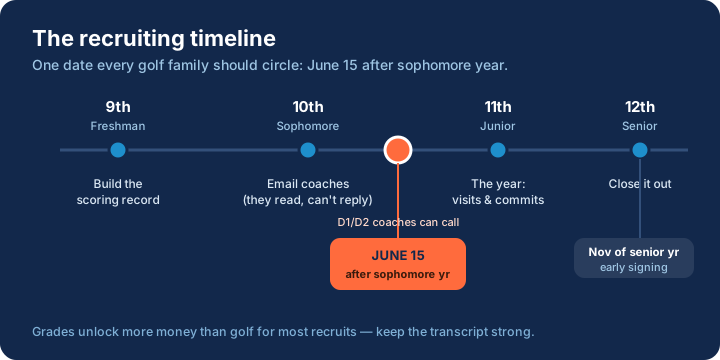
Goal: get on radars. NCAA D1/D2 coaches generally can't initiate recruiting conversations until June 15 after sophomore year — a date every golf family should circle.
- Before June 15: you can email coaches (they can't respond substantively, but they read). Send a short intro: scoring average, upcoming schedule, transcript, swing video link.
- Research 20–30 programs across divisions honestly matched to your scores — not your hopes.
- Attend a camp or two at realistic target schools; they double as evaluations.
Junior year (11th grade)
Goal: this is the year. Most golf commitments take shape from June 15 (after 10th) through junior year.
- Summer before junior year is the most-watched stretch of junior golf. Peak your schedule June–August with your strongest 36–54 hole events.
- Email coaches before each event with your tee times; follow up after with results — win or lose.
- Take unofficial visits; official visits are generally available starting junior year.
- Reread how coaches read rankings: scoring average against strong fields is the résumé.
Senior year (12th grade)
Goal: close. Early signing period for golf arrives in November of senior year.
- Uncommitted? Stay loud: many rosters fill late, especially D2/D3/NAIA — and those are great golf and great money.
- Verify NCAA Eligibility Center registration, transcripts, and test scores are clean.
- Weigh full offers honestly: coaching fit, roster depth (will you travel?), academic fit, total cost after all aid.
The mistakes that cost families
- Waiting to be discovered. Coaches recruit from inboxes and leaderboards they already follow. If you haven't emailed, you don't exist.
- A schedule built for trophies, not evaluation. Coaches need 36-hole results against fields they can calibrate.
- D1-or-nothing thinking — it leaves scholarship money and great experiences on the table.
- Ignoring academics. For most recruits, grades unlock more money than golf does.
International player? Your path has extra steps — start with our international recruiting guide.
Written by the Junior Golf America editorial team at AmateurGolf.com. Costs, rules, and tour policies change; confirm specifics with each organizer before entering.