For Parents · 2 min read · Updated September 11, 2026
How Much Does Junior Golf Really Cost? A Parent's Honest Budget Guide
Nobody publishes honest numbers about what competitive junior golf costs. Here they are — with the caveat that costs vary enormously by region and how far you travel. Use these as planning ranges, not quotes.
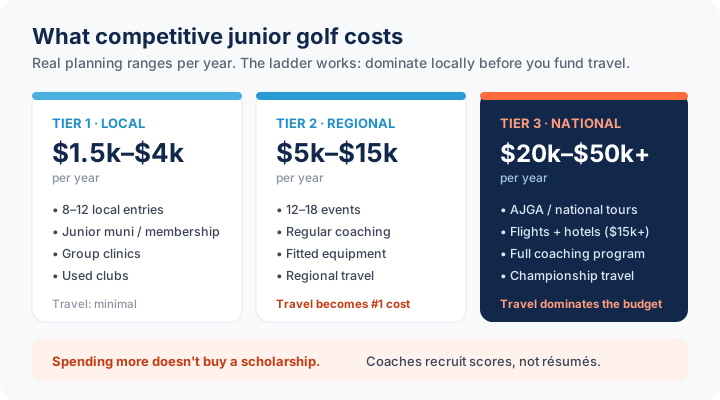
The three budget tiers
Tier 1: Local competitor (~$1,500–$4,000/year)
Club junior programs, city championships, one-day state association events within driving distance.
- Entry fees: 8–12 events × $30–$75
- Junior club membership or muni access: often $200–$800/year (junior rates are golf's best-kept secret)
- Group instruction/clinics: $500–$1,500
- Equipment: $300–$800 (juniors outgrow clubs — buy used, sell used)
Tier 2: Regional traveler (~$5,000–$15,000/year)
State association majors, PGA section junior tour, some multi-day events requiring hotel nights.
- Entry fees: 12–18 events × $100–$300
- Travel: 4–8 overnight trips (hotel, gas, meals add up faster than entries)
- Regular coaching: $1,500–$4,000
- Equipment, fitted: $800–$1,500
Tier 3: National schedule (~$20,000–$50,000+/year)
AJGA and national tour events, flights, championship-season travel.
- Entries plus tour memberships: $3,000–$6,000
- Air travel and hotels for 6–12 events: this is the dominant cost — often $15,000+
- Full coaching program (swing, short game, fitness, sometimes mental): $5,000–$15,000
The honest truths behind the numbers
Travel, not golf, is the biggest line item from Tier 2 up. A $250 entry fee comes with $700 of travel attached. The single best budget decision is building a smarter schedule with fewer, better-chosen travel events — our scheduling guide covers exactly that.
Spending more does not buy a college scholarship. Coaches recruit scores, not résumés of expensive tournaments. A junior who dominates a strong state schedule is more recruitable than one with mediocre finishes at national events — and roughly $20,000/year cheaper.
The under-13 years should be cheap. Rankings and results before age 13 have almost no bearing on recruiting. Money spent flying a 10-year-old to national events buys nothing that a great local program doesn't.
Where to save without hurting development
- Junior rates everywhere: municipal season passes, twilight rates, junior memberships — many families cut course-access costs by half.
- Buy used clubs, sell them back. Growing juniors need fittings, not new-in-plastic equipment.
- State association events are the best value in golf — championship-caliber courses and fields at a fraction of national-tour cost.
- Group instruction until the fundamentals are set. One-on-one coaching earns its cost when there's a specific competitive game to refine.
- Drive-and-share: splitting travel with another tournament family halves the biggest line item.
A sane budget philosophy
Match spending to the player's current level, not their dream. The ladder works: dominate locally → fund regional → then decide if national travel earns its cost. And if the goal is college golf, read the recruiting timeline before writing checks — the record coaches evaluate is more achievable, and more affordable, than the junior golf industry wants you to believe.
Written by the Junior Golf America editorial team at AmateurGolf.com. Costs, rules, and tour policies change; confirm specifics with each organizer before entering.